
ERAS Photo Requirements and Residency Headshots in Boston
There is no single ERAS photo specification. There are three, and which one applies to you depends on how your photo reaches the system. Residency applicants uploading in MyERAS are allowed 150 KB. So are international medical graduates, who submit through ECFMG instead. Fellowship applicants uploading through EFDO Online Services are allowed 100 KB. That 100 KB figure is the one most often published as the residency limit, and it is wrong by a third.

The three upload paths
| Residency, US grad | Residency, IMG | Fellowship | |
|---|---|---|---|
| Where it is uploaded | MyERAS portal | ECFMG MyIntealth | EFDO Online Services |
| File type | JPG/JPEG or PNG | JPEG only | Not specified |
| Maximum file size | 150 KB | 150 KB | 100 KB |
| Dimensions | Not specified by AAMC | No larger than 2.5 x 3.5 in. | 2.5 x 3.5 in. |
Sources: AAMC MyERAS Applicant User Guide, photo chapter; ECFMG ERAS supporting documents; AAMC MyERAS documents for fellowship applicants. Verified against those sources on August 18, 2026, for the 2027 season.
The only composition rule AAMC publishes
Face centered in the photo. That is the whole of it.
What AAMC does not tell you, and what the internet says instead
For US medical graduates uploading in MyERAS, AAMC publishes a file type and a size ceiling. It does not publish a pixel dimension. It does not publish an aspect ratio. It does not publish a DPI figure.
Search for the requirements and you will find 375 by 525 pixels quoted as an official AAMC number, sometimes with the claim that MyERAS validates it. The arithmetic behind it is clean, which is why it spreads: 2.5 by 3.5 inches at 150 DPI comes out to exactly 375 by 525. The inch measurement is real, but it belongs to the ECFMG and EFDO paths, not to the MyERAS upload. Somewhere along the way one path's rule became everybody's rule.
Work to those proportions anyway. A 2.5 by 3.5 portrait crop is the right shape for how programs display the photo, and staying under 150 KB at that size is not difficult. Just understand that you are following a convention rather than passing a validator.
Background
Neither AAMC nor ECFMG specifies one. A plain wall in white, light grey or a muted mid-grey all read correctly at the size this photo gets viewed. What matters more is that the background is empty. A doorframe, a plant or a second person in soft focus behind you all pull attention off your face, and your face is the entire point of the file.
Should you smile
Yes. This is not a passport photo and nobody is checking for a neutral expression. A program director is deciding whether you look like someone they want in the building for three years. A closed-mouth, genuine smile is the safest read of that. Directors interview people, not documents.
Taking it yourself
You can. Phone cameras are good enough now that the file will pass every technical check. What they will not give you is even light on both sides of your face, a background far enough behind you to fall out of focus, and someone telling you that your chin is doing something odd. Those three things are the difference between a photo that looks like you on a good day and one that looks like a photo you took of yourself.
Assigning the photo, which is the step people miss
Uploading is not the same as making it visible. In MyERAS the photo has to be assigned to programs on the Additional Documents tab. You can assign it before you have uploaded anything. Once it is assigned to a program you have already applied to, it cannot be unassigned.
International medical graduates have the same step, one layer later. ECFMG transmits your file to MyERAS within 24 hours of a successful upload, and the assignment happens after that.
Timing for the 2027 season
Applicants could begin submitting to programs on September 2, 2026. Programs began reviewing applications on September 23, 2026. The season closes May 31, 2027.
The photo is not required in order to submit, which is why so many applicants deal with it in the three weeks between those first two dates. Files come back in 2-3 business days. Build the session into that window rather than the week of.
Medical students need a photo before ERAS asks for one
A school directory or class page commonly asks for a photograph, and so do research and lab group profiles. None of those publishes a file specification the way AAMC and ECFMG do. That is what makes them easy to underestimate. A phone snapshot clears them, and then it is the picture that follows you.
One session covers both uses, provided you keep the original files. The ERAS requirement is a file requirement: 150 KB, and on two of the three paths a 2.5 x 3.5 crop. It is applied to a copy at upload, and it does not describe a different photograph from the one a directory page wants. A portrait made now still meets the specification when you upload it, so long as the full-resolution original is on hand.
Booking a residency headshot in Boston
You are in front of the camera for 5-10 minutes. The whole appointment runs about 15 minutes. Retouching is included, your gallery is up within 2 business days, and final files land 2-3 business days after the session. Rated 5.0 across 184 Google reviews.
Most residency applicants have never sat for a professional portrait. The guide to what happens at a headshot session walks through it from arrival to file delivery.
A single-person session is $350. Sessions run at my studio in Reading, 10 miles north of Boston, or at a location that suits you.
Along with the full-resolution files, you get a copy sized and compressed to the ERAS specification for your upload path. Nothing to resize, and no discovering at midnight that your file is 400 KB.
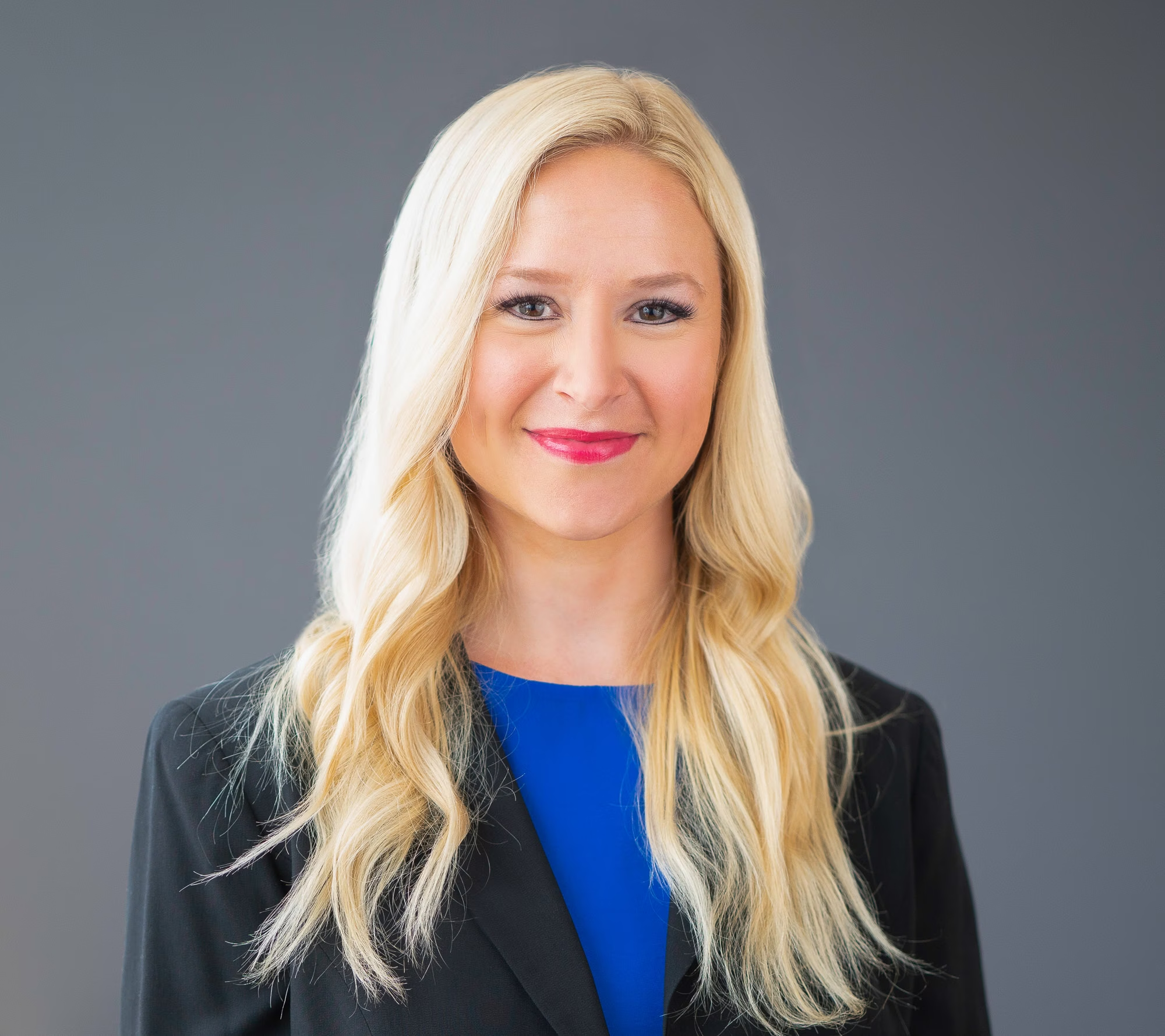
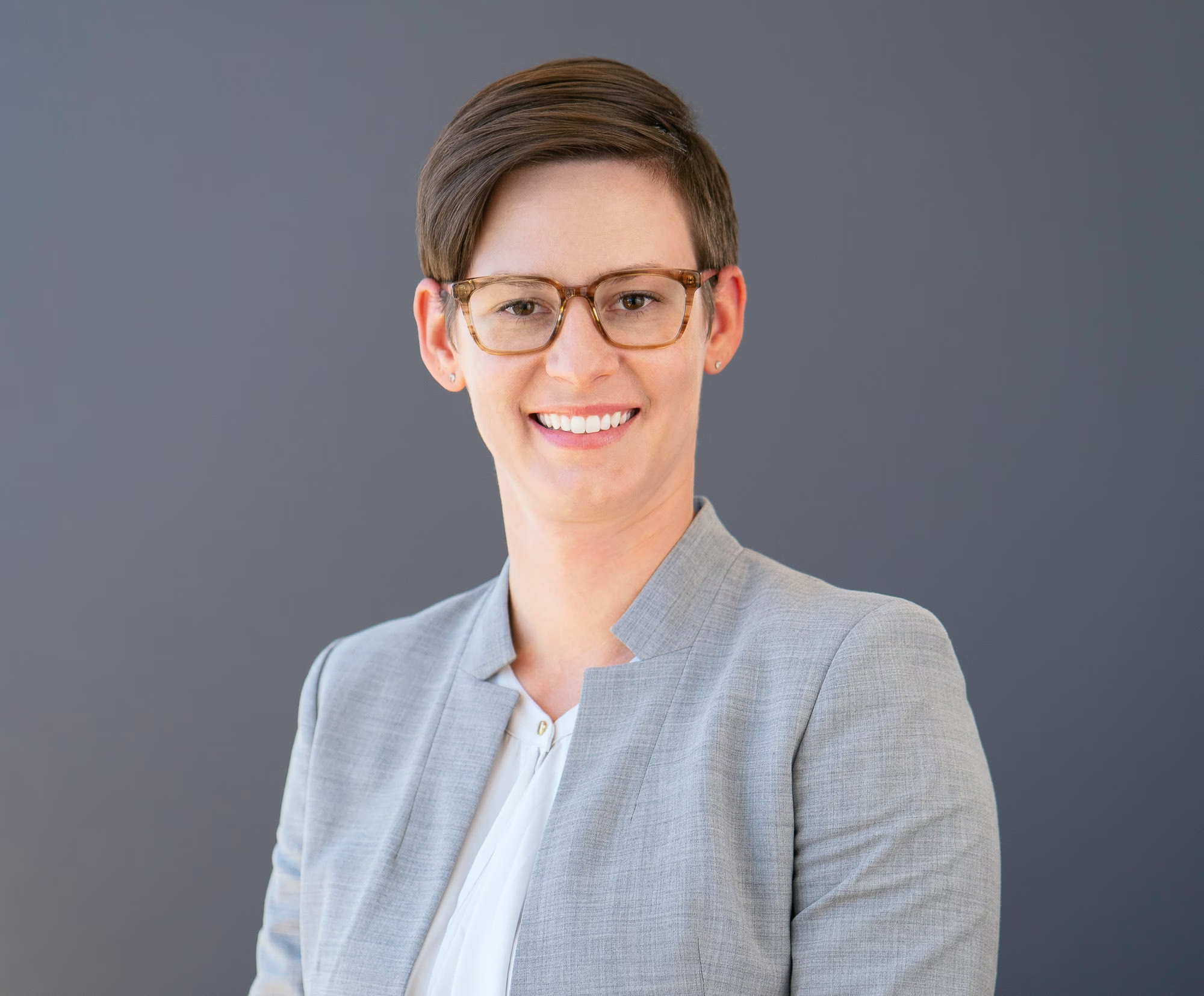
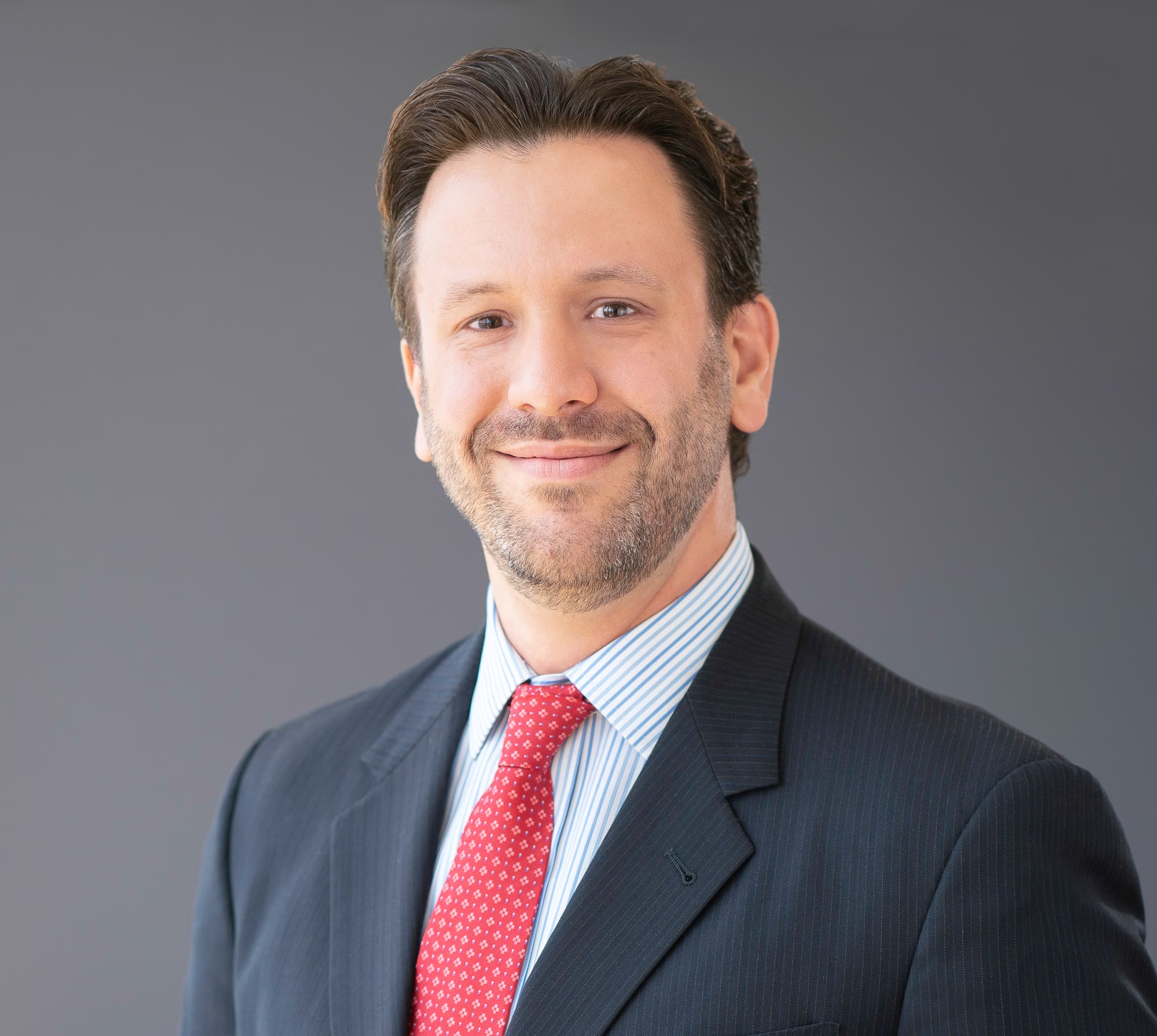

Questions applicants ask
What is the maximum file size for an ERAS photo?
150 KB for residency applicants, whether you upload through MyERAS as a US medical graduate or through ECFMG as an international medical graduate. Fellowship applicants uploading through EFDO Online Services are held to 100 KB. The 100 KB figure is published on a number of photographer sites as the residency limit. It is not.
Does AAMC require a specific pixel dimension for the residency photo?
No. The AAMC photo guidance for MyERAS states the file type and the 150 KB ceiling, and says the face must be centered. It does not publish a pixel dimension, an aspect ratio or a DPI figure. Sites that quote 375 by 525 pixels as an AAMC requirement are quoting a number AAMC does not publish. It is a reasonable size to work to. It is not a rule you can fail.
I am an international medical graduate. How does my photo get into ERAS?
You do not upload it in MyERAS. You submit it through ECFMG's MyIntealth portal, under ERAS Support Services, on the Document Upload tab. It must be JPEG, no larger than 2.5 by 3.5 inches, and 150 KB or less. ECFMG transmits it to your MyERAS application within 24 hours. You then have to assign it on the Additional Documents tab before programs can see it.
When do I actually need the photo?
Residency applicants could begin submitting applications to programs on September 2, 2026, and programs began reviewing on September 23, 2026. The photo is not required to submit, so most applicants discover they need one somewhere between those two dates. Files come back from me in 2-3 business days, so book with that gap in mind rather than the submission date.
What should I wear?
A suit or a jacket in a solid mid-tone. Navy and charcoal both work. Skip fine stripes, small checks and anything with a logo, because at the size a program director views this photo those patterns turn into noise. Bring a second option if you own one. Deciding in front of the mirror is harder than deciding in front of the camera.
How much does an ERAS headshot cost in Boston?
My single-person session is $350. That includes retouching, a gallery within 2 business days, final files in 2-3 business days, and a copy of your selected image sized and compressed to the ERAS specification for your upload path. Sessions run at my studio in Reading, 10 miles north of Boston, or at a location that suits you.
Can I use an AI-generated headshot?
No. The photo exists so a program can recognize you when you walk in for the interview. An image that flatters you into someone else defeats the only job it has. Several of the sites publishing ERAS photo specifications are AI portrait platforms, which is worth knowing when you read their advice.
I am a medical student and not applying to residency yet. Do I need a different photo?
Not a different photograph. The ERAS specification applies to the file, and a copy is sized and compressed at upload. A portrait made for a school directory or a research profile already qualifies, provided you kept the full-resolution original. Losing that original is the common mistake.